 +1 (713) 581-6066
 +1 (346) 668-7438
Tag: best publishing firm in Florida

How to Use Cliffhangers in Manga and Anime Stories to Keep Readers Hooked
How to Use Cliffhangers in Manga and Anime Stories to Keep Readers Hooked | Book Writing Venture
In the world of manga and anime storytelling, one of the most powerful techniques used by successful creators is the cliffhanger.
A well-placed cliffhanger keeps readers emotionally invested, builds suspense, and encourages them to continue reading the next chapter or volume.
Whether you’re writing a manga-inspired novel or an anime-style series, mastering cliffhangers can dramatically increase reader engagement and long-term success.
What Is a Cliffhanger in Manga and Anime?
A cliffhanger is a storytelling technique where a chapter or scene ends at a moment of high tension, leaving the audience wanting more.
This could include:
- A major revelation
- A sudden twist
- A life-threatening situation
- An unexpected character decision
Cliffhangers are commonly used at the end of chapters, episodes, or volumes to maintain suspense and excitement.
Why Cliffhangers Are So Powerful
Cliffhangers work because they trigger curiosity and emotional tension.
When readers don’t get immediate answers, they feel compelled to continue.
This technique helps:
- Increase reader retention
- Build emotional investment
- Create anticipation for the next part
- Strengthen overall storytelling
Many of the most successful manga and anime series rely heavily on this method to keep audiences engaged.
Types of Cliffhangers You Can Use
1. The Revelation Cliffhanger
Ending a chapter with a shocking truth or hidden secret.
2. The Action Cliffhanger
A battle or conflict stops at a critical moment.
3. The Emotional Cliffhanger
A character faces a difficult or life-changing decision.
4. The Twist Cliffhanger
An unexpected event changes the direction of the story.
Using a mix of these types keeps your story dynamic and unpredictable.
How to Use Cliffhangers Effectively
To use cliffhangers properly in your manga or anime-style book:
Build Tension Gradually
Don’t rush into a cliffhanger. Develop the scene so the moment feels impactful.
End at the Right Moment
The best cliffhangers occur just before resolution, not after.
Keep It Meaningful
Avoid using cliffhangers randomly. Each one should push the story forward.
Balance the Story
Too many cliffhangers can overwhelm readers. Use them strategically.
Real Example: Modern Anime-Inspired Storytelling
A great example of cliffhanger-driven storytelling is the book
Traumatixxx (Sono Kakusei) by Jonathan Luis Garcia.

This anime-inspired series uses tension, emotional buildup, and chapter-ending suspense to keep readers engaged throughout the story.
The book is now available on:
By studying how suspense is built and released in this book, readers and aspiring writers can better understand how effective cliffhangers work in modern storytelling.
How Book Writing Venture Helps Authors Master Storytelling
Many writers struggle with:
- Structuring their story
- Creating engaging chapters
- Maintaining reader interest
- Knowing where to place cliffhangers
That’s where Book Writing Venture comes in.
Having helped thousands of clients, the team specializes in:
- Completing unfinished manuscripts
- Developing story structure from scratch
- Enhancing pacing and engagement
- Creating compelling cliffhangers
- Transforming ideas into publish-ready books
Whether your story is half-written or just an idea, professional guidance can turn it into a powerful narrative that keeps readers hooked.
Frequently Asked Questions
What is a cliffhanger in storytelling?
A cliffhanger is a technique where a story ends at a suspenseful moment, encouraging the audience to continue.
Why are cliffhangers important in manga and anime?
They keep readers engaged, build anticipation, and increase emotional connection with the story.
How often should you use cliffhangers?
Cliffhangers should be used strategically at key moments, not in every scene.
Can beginners use cliffhangers effectively?
Yes. With proper structure and guidance, even new writers can use cliffhangers successfully.
Final Thoughts
Cliffhangers are one of the most powerful storytelling tools in manga and anime-inspired writing.
When used correctly, they transform a simple story into an addictive reading experience.
For writers looking to create engaging, high-quality books, mastering cliffhangers is essential.
With expert support from Book Writing Venture, authors can turn their ideas into compelling stories that captivate readers from beginning to end.
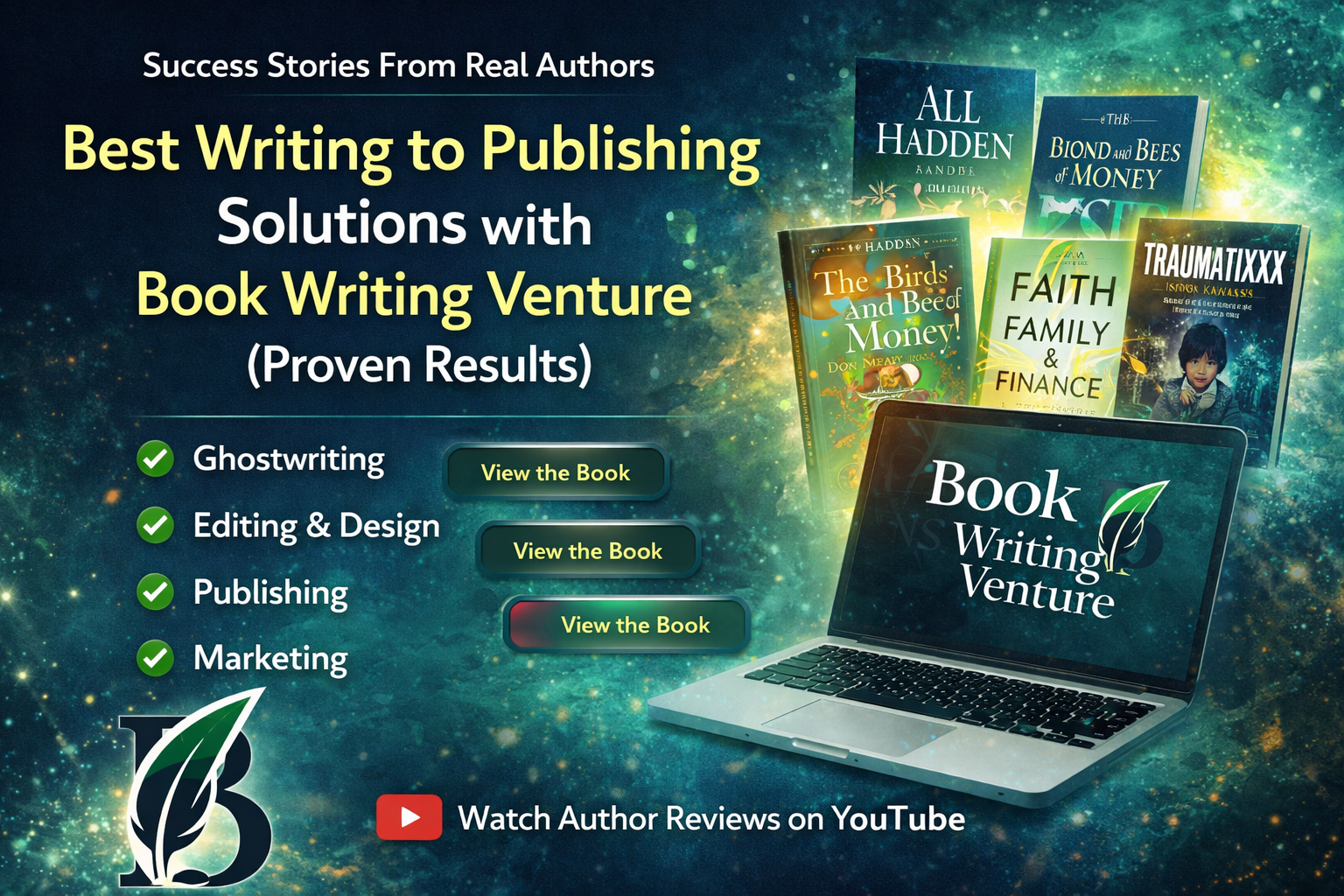
How and Why You Can Get the Best Writing to Publishing Solution with Book Writing Venture
How and Why You Can Get the Best Writing to Publishing Solution with Book Writing Venture
In today’s competitive publishing world, turning an idea into a professionally written and published book requires more than just creativity. It requires strategy, expertise, and the right team.
From writing and editing to design, publishing, and marketing — authors need a complete solution.
That’s where Book Writing Venture stands out as a trusted partner for authors looking to transform their ideas into successful, published books.
Why Authors Choose a Complete Writing to Publishing Solution
Many aspiring authors struggle with:
- Structuring their ideas into a book
- Maintaining consistency in writing
- Editing and proofreading
- Designing a professional layout
- Navigating publishing platforms
- Marketing their book effectively
Instead of managing multiple services separately, a one-stop solution ensures:
✔ Consistency in quality
✔ Faster turnaround
✔ Professional results
✔ Stress-free publishing journey
What Makes Book Writing Venture Different?
Book Writing Venture provides an end-to-end publishing solution tailored for modern authors.
Their services include:
- Professional ghostwriting
- Editing and proofreading
- Book formatting and design
- Cover design
- Publishing support
- Marketing and branding
This integrated approach ensures that every book meets industry standards and reaches its intended audience effectively.
Proven Success: Books Published by Book Writing Venture
One of the strongest indicators of a reliable publishing partner is real success stories.
Here are some notable books successfully published with the support of Book Writing Venture:
📘 All Hadden by Mark Hadden
A compelling work that reflects personal insights and storytelling depth, this book showcases the power of structured writing and professional publishing.
👉 View the Book & Podcast here:
(All Hadden Book) (Podcast With Mark Hadden)
📘 The Birds and Bees of Money by Don Meyer & Rowan Pennington
This book simplifies complex financial concepts and presents them in an engaging and accessible way for readers of all backgrounds.
👉 View the Book & Podcast here:
(The Birds and Bees Of Money) (Podcast With Don Meyer)
📘 Faith, Family & Finance by Rusty M Bresse
A powerful blend of personal values and financial guidance, this book resonates with readers looking for purpose-driven success.
👉 View the Book & Podcast here:
(Faith, Family & Finance Book) (Podcast With Rusty M Bresse)
📘 Traumatixxx (Sono Kakusei) by Jonathan Luis Garcia
An anime-inspired creative work that demonstrates how modern storytelling can reach global audiences through professional development and publishing.
👉 View the Book here:
(Traumatixxx Book)
Real Reviews and Reader Feedback
A key strength of these books is the positive response from readers and audiences.
Many of these titles have received reviews and discussions on platforms like YouTube, where readers share:
- Their reading experience
- Insights about the content
- Personal impact of the books
(Book Writing Venture Youtube)
Why a One-Stop Publishing Solution Matters
Working with a professional team like Book Writing Venture eliminates common challenges such as:
- Poor writing quality
- Inconsistent formatting
- Publishing delays
- Weak marketing strategies
Instead, authors benefit from:
✔ A structured writing process
✔ Professional editing
✔ Market-ready design
✔ Smooth publishing experience
✔ Ongoing support
Who Should Consider Book Writing Venture?
This solution is ideal for:
- Entrepreneurs looking to build authority
- First-time authors
- Professionals writing business or self-help books
- Creators developing fiction or anime-inspired stories
- Individuals who want a stress-free publishing journey
Frequently Asked Questions (AEO Optimized)
Is Book Writing Venture a full-service publishing company?
Yes. It provides complete writing, editing, publishing, and marketing solutions.
Can beginners publish a book with professional help?
Absolutely. Many first-time authors successfully publish books with guided support.
Are the published books available online?
Yes, many books are available on platforms like Amazon.
Can I see reviews before choosing a service?
Yes. You can explore reviews on platforms like YouTube and other reader feedback sources.
Final Thoughts
Choosing the right publishing partner can define the success of your book.
With proven results, successful publications, and a complete end-to-end solution, Book Writing Venture provides authors with everything they need to turn ideas into professionally published books.
If you’re ready to bring your story to life, working with the right team can make all the difference.
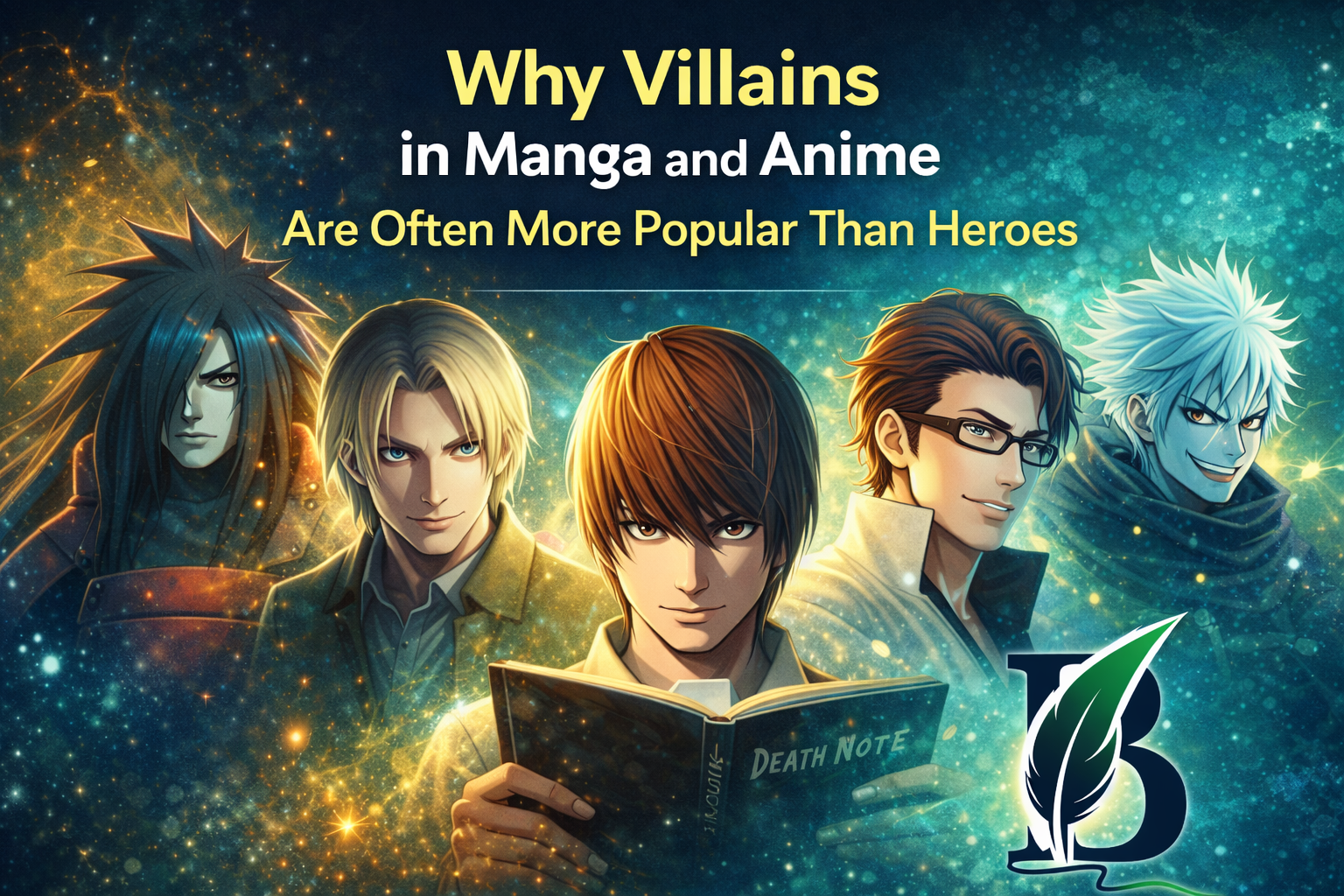
Why Villains in Manga and Anime Are Often More Popular Than Heroes
Why Villains in Manga and Anime Are Often More Popular Than Heroes | Book Writing Venture
In the world of manga and anime, heroes usually represent hope, justice, and perseverance. However, many fans often find villains even more fascinating than the protagonists.
From complex motivations to powerful personalities, villains frequently leave a stronger emotional impact on audiences. Some antagonists have become so iconic that they are remembered more than the heroes themselves.
Understanding why villains become more popular helps writers, manga creators, and storytellers design compelling characters that elevate an entire series.
The Psychology Behind Memorable Villains
A well-written villain is rarely just “evil.” Instead, the best antagonists have:
- Clear motivations
- Personal philosophies
- Emotional backstories
- Strong connections to the hero
When audiences understand a villain’s reasoning, they begin to see them as complex individuals rather than simple enemies.
This emotional depth often makes villains more memorable and relatable.
Famous Manga and Anime Villains That Became Iconic
Many globally successful manga and anime series became legendary because of their villains.
Light Yagami – From the manga and anime Death Note
Created by writer Tsugumi Ohba and illustrator Takeshi Obata, Light Yagami is one of the most psychologically complex characters in manga history.
Although technically the protagonist, Light becomes the main villain of the story as he attempts to reshape the world using supernatural power.
The anime adaptation was directed by Tetsurō Araki, further cementing the character’s global popularity.
Why fans love this villain:
- Moral complexity
- Strategic intelligence
- A powerful ideological conflict
Madara Uchiha – From Naruto
Created by legendary manga artist Masashi Kishimoto, Madara Uchiha represents one of the most powerful antagonists in anime history.
Madara’s philosophy about peace and control over the world adds depth to the conflict within the Naruto universe.
Why this villain stands out:
- Enormous power level
- Deep historical connection to the world
- A belief system that challenges the hero
Hisoka Morow – From Hunter × Hunter
Created by Yoshihiro Togashi, Hisoka is one of the most unpredictable villains in anime.
Fans are fascinated by his chaotic personality and unique moral compass.
Reasons for popularity:
- Unpredictable behavior
- Charismatic personality
- Complex relationship with the protagonist
Sosuke Aizen – From Bleach
Written and illustrated by Tite Kubo, Aizen is a master manipulator whose intelligence and planning make him one of the most respected villains in anime storytelling.
His calm personality combined with immense power created unforgettable plot twists.
Johan Liebert – From Monster
Created by acclaimed manga author Naoki Urasawa, Johan Liebert is often considered one of the greatest villains in psychological storytelling.
Unlike traditional anime villains, Johan’s power lies in manipulation and psychological control.
This makes him deeply disturbing yet incredibly compelling.
Why Villains Often Outshine Heroes
There are several reasons why villains gain stronger fan followings than heroes.
Villains Have Greater Freedom
Heroes often represent morality and responsibility, which limits their actions.
Villains, however, can challenge rules, social norms, and moral boundaries, making them unpredictable and exciting.
Villains Drive the Story Forward
Without strong antagonists, heroes would have no meaningful challenges.
Great villains push the narrative forward and force protagonists to grow.
Villains Often Have Better Character Development
In many manga and anime series, villains receive deeper backstories and philosophical motivations.
This allows audiences to understand their emotional journey.
Lessons for Writers and Manga Creators
If you are writing your own manga or anime-inspired story, designing a powerful villain is just as important as creating the hero.
Key lessons include:
- Give villains clear motivations
- Avoid one-dimensional evil characters
- Create emotional connections between hero and villain
- Allow villains to challenge the hero’s beliefs
These techniques make stories more engaging and memorable.
Professional storytelling teams, such as Book Writing Venture, often help creators structure characters, develop compelling conflicts, and transform creative ideas into powerful narratives that can connect with readers worldwide.
Frequently Asked Questions
Why are anime villains so popular?
Anime villains are often written with complex motivations and emotional backstories, making them more compelling than simple antagonists.
Who is the most famous manga villain?
Characters like Light Yagami, Madara Uchiha, and Johan Liebert are widely considered some of the most iconic villains in manga history.
Do villains make a story better?
Yes. Strong villains create conflict, challenge the hero, and make the story more exciting.
Can a villain be the main character?
Yes. Some manga and anime stories focus on morally complex protagonists who gradually become villains.
A Real Example of Modern Anime-Inspired Storytelling
The growing popularity of manga and anime storytelling has inspired many creators around the world to develop their own original series. One recent example is the book Traumatixxx: (Sono KaKusei) by Jonathan Luis Garcia.
This anime-inspired story explores powerful themes, intense character development, and a dramatic narrative style similar to modern manga storytelling. The book has recently been completed with the support of Book Writing Venture and is now available on Amazon, where readers can explore this unique creative project.
You can view the book here:
(https://a.co/d/01p75yo7)
Projects like Traumatixxx: (Sono KaKusei) demonstrate how manga-inspired storytelling continues to grow beyond Japan and reach global audiences.
Bringing Your Manga or Anime Story to Life
Creating a manga or anime-style book requires careful planning, strong character development, and compelling storytelling. Many aspiring creators have powerful ideas but need professional guidance to structure their stories properly.
That’s where Book Writing Venture comes in.
As a one-stop solution for writers and creators, the team helps authors transform ideas into fully developed books, including:
- Story development
- Character creation
- Manga or anime-inspired writing
- Ghostwriting and editing
- Book design and publishing support
Whether you want to write a manga-style novel, develop an anime-inspired series, or publish your first creative book, professional guidance can help turn your concept into a polished and publish-ready project.
Final Thoughts
Villains play a critical role in the success of manga and anime storytelling. Their motivations, philosophies, and personalities often leave lasting impressions on audiences.
From psychological masterminds to powerful warriors, iconic antagonists have shaped some of the most successful manga and anime series ever created.
For aspiring creators, understanding how to design compelling villains can elevate an entire story and make it unforgettable.

How to Write and Design a Successful Manga or Anime Series
How to Write and Design a Successful Manga or Anime Series | Book Writing Venture
Manga and anime storytelling has become one of the most powerful creative industries in the world. From Japan to global audiences, millions of readers and viewers follow compelling stories filled with memorable characters, epic conflicts, and emotional journeys.
However, creating a successful manga or anime series requires much more than just drawing characters or writing dialogue. Writers and creators must carefully design the world, introduce characters strategically, and build villains that keep readers engaged throughout the series.
In this guide, we’ll explore the key elements every creator should understand when writing and designing a manga or anime series.
Understanding the Core of Manga Storytelling
At its heart, a great manga series is built on strong storytelling and emotional connection.
Readers stay invested in a series when they experience:
- A relatable main character
- A unique fictional world
- Conflicts that continuously evolve
- Villains with believable motivations
- Emotional character development
Many of the most successful manga series became global hits because they balance action, character growth, and world-building effectively.
For aspiring creators, understanding these foundations is the first step in developing a compelling manga narrative.
Designing Memorable Manga Characters
Characters are the soul of any manga or anime story. Readers connect with characters long before they remember the plot.
A well-designed character typically includes:
Distinct Personality
Each character should have a clear personality trait that defines them.
For example:
- Determined heroes
- Strategic thinkers
- Comedic relief characters
- Loyal companions
Visual Identity
In manga storytelling, visuals play a huge role. Hairstyles, outfits, and body language help readers instantly recognize characters.
Clear Goals
Every major character should want something specific. This creates motivation and drives the story forward.
When characters have clear ambitions, readers naturally become invested in their journey.
How to Introduce Characters in a Manga Series
Introducing characters properly is one of the most important storytelling techniques.
If too many characters appear at once, readers can become confused. Successful manga series usually introduce characters gradually across different story arcs.
Effective character introduction strategies include:
Start With the Protagonist
The main character should appear early and establish the tone of the story.
Introduce Allies Through Events
Supporting characters often enter the story through challenges, missions, or unexpected encounters.
Reveal Backstories Slowly
Instead of explaining everything immediately, great manga writers reveal character histories gradually to build emotional depth.
This technique keeps readers curious and encourages them to continue reading.
Creating Powerful Villains in Manga Stories
A great villain can elevate a manga series from good to unforgettable.
The most compelling antagonists are not simply evil—they have clear motivations and complex personalities.
Important villain traits include:
Strong Motivation
Readers should understand why the villain behaves the way they do.
Personal Connection to the Hero
Many great stories link the villain directly to the protagonist’s journey.
Escalating Threat
As the series progresses, villains should become stronger, smarter, or more dangerous.
This constant escalation keeps the story exciting and unpredictable.
Balancing Action, Emotion, and Story Progression
Successful manga series rarely rely on action alone. They balance several storytelling elements:
- Character development
- Emotional storytelling
- Strategic battles
- Humor and light moments
- Plot twists
This balance prevents the story from feeling repetitive and keeps audiences engaged across multiple volumes.
The Importance of World-Building
World-building is another key element that defines great manga series.
A believable world includes:
- Unique locations
- Cultural rules and traditions
- Power systems or abilities
- Political or social conflicts
These elements make the fictional universe feel alive and immersive.
Many globally successful manga series became popular because their worlds felt vast and detailed.
How Professional Writing Support Can Help Creators
Many aspiring creators have incredible ideas but struggle with story structure, pacing, or character development.
Professional writing support can help transform raw concepts into fully developed stories.
At Book Writing Venture, experienced writers and publishing professionals assist creators with:
- Story development
- Character design strategies
- Plot structuring
- Manga and graphic novel writing
- Publishing preparation
This type of guidance can significantly improve the quality and market potential of a manga or anime-inspired book series.
Frequently Asked Questions
What makes a manga series successful?
A successful manga series combines strong storytelling, memorable characters, engaging villains, and a well-developed fictional world.
How many characters should a manga series have?
Most successful manga introduce characters gradually. Starting with a small core cast helps readers build emotional connections.
Why are villains important in manga stories?
Villains create conflict, challenge the protagonist, and drive the story forward. A well-written antagonist can make the narrative much more compelling.
Can beginners write a manga series?
Yes. Many creators start with simple stories and gradually improve their skills. With proper planning and guidance, beginners can develop strong manga concepts.
Do manga creators work with professional writers?
In many cases, manga artists collaborate with professional writers or editors to refine storytelling and structure.
Final Thoughts
Writing and designing a successful manga or anime series requires creativity, planning, and a deep understanding of storytelling.
From introducing compelling characters to crafting powerful villains, every element contributes to the overall experience for readers.
For creators who want to transform their ideas into professionally written manga-style stories, expert guidance can make a significant difference.
Companies like Book Writing Venture help aspiring storytellers turn imaginative concepts into structured, publish-ready books that can reach global audiences.

Best Selling Manga & Anime Series Books in 2026
Best Selling Manga & Anime Series Books in 2026 | Book Writing Venture
Manga and anime continue to dominate global publishing in 2026. From long-running legends to new breakout hits, Japanese storytelling has become a billion-dollar industry worldwide.
If you’re wondering which manga and anime books are selling the most in 2026, this guide highlights the biggest and most influential titles shaping the market.
Why Manga Is Still Booming in 2026
Manga sales have consistently grown due to:
- Global anime streaming platforms
- Social media fandom communities
- Collector culture
- High-quality storytelling across genres
- Digital manga apps
In fact, manga now represents a significant portion of global graphic novel sales.
Most Selling Manga & Anime Series Books in 2026
1. One Piece
Still one of the highest selling manga series of all time, One Piece continues to break records in 2026 as it approaches its final saga.
Why it’s selling:
- Massive global fanbase
- Anime continuation hype
- Collector edition releases
2. Demon Slayer: Kimetsu no Yaiba
Although completed, Demon Slayer remains a top-selling manga due to movie adaptations and international popularity.
Key factor: Limited box sets and anniversary editions.
3. Jujutsu Kaisen
One of the strongest dark fantasy titles of the decade, continuing strong sales due to anime seasons and intense fan engagement.
4. Attack on Titan
Even after its conclusion, this series remains among the highest-selling manga globally due to collector reprints and omnibus editions.
5. Chainsaw Man
Known for its unconventional storytelling and explosive anime adaptation, Chainsaw Man is a consistent top performer in 2026.
6. My Hero Academia
Superhero manga continues to attract global audiences and remains one of the most commercially successful titles worldwide.
7. Spy x Family
A mix of action, comedy, and heart — this series appeals to both younger readers and adult fans.
8. Blue Lock
Sports manga has exploded internationally, and Blue Lock leads football-themed manga sales in 2026.
9. Tokyo Revengers
Despite ending, its box sets and spin-offs continue strong global demand.
10. Solo Leveling
Originally a Korean web novel and webtoon, Solo Leveling’s print editions and anime adaptation have boosted global book sales significantly.
What Makes a Manga Series a Bestseller?
In 2026, top-selling manga typically share:
- Strong anime adaptation
- Social media hype (TikTok, YouTube edits)
- Limited collector editions
- Crossover appeal beyond Japan
- Merchandise ecosystem
Frequently Asked Questions
What is the best selling manga series of all time?
One Piece remains the highest selling manga series in history.
Which manga is trending the most in 2026?
Jujutsu Kaisen, Chainsaw Man, and Blue Lock are among the most trending globally.
Is manga more popular than traditional novels?
In many markets, manga outsells traditional paperback fiction, especially among younger readers.
Why are anime adaptations important for book sales?
Anime adaptations dramatically increase global exposure and boost physical manga sales.
Are manga books a good investment for collectors?
Limited editions, box sets, and first prints often increase in value over time.
Final Thoughts
The manga and anime publishing industry continues to grow in 2026, driven by global fandom, streaming platforms, and collector culture.
For aspiring creators and publishers, manga proves that compelling storytelling — when supported by strong branding and adaptation — can create worldwide success.
If you want to start working on this concept, contact us, and we can help you build your anime series.

10 Easy Passive Income Ideas for Authors in 2026
10 Easy Passive Income Ideas for Authors in 2026 | Book Writing Venture
In 2026, writing a book is not the only way authors earn money. Smart authors are building multiple passive income streams from one book. They do not depend on only book sales. They create systems that help them earn again and again.
If you want to succeed as an author in 2026, you must think beyond publishing. Whether you choose self-publishing or work with the best publishing firm in Florida like Book Writing Venture, building passive income is the real game changer.
Let us explore the 10 easy passive income ideas for authors in 2026.
1. Audiobooks Are Growing Fast
Audiobooks are one of the biggest income sources in 2026. Platforms like Audible allow authors to sell their books in audio format worldwide.
Many readers prefer listening instead of reading. If your book is already published, converting it into an audiobook creates a new income stream without writing a new book.
Example: James Clear earns from print, ebook, and audiobook versions of Atomic Habits.
2. Sell Ebooks on Multiple Platforms
Do not depend on one marketplace. Use platforms like Amazon Kindle Direct Publishing, Apple Books, and Kobo.
The more platforms you use, the more global audience you reach. Ebooks require no printing cost, which increases profit margins.
Smart authors optimize keywords and descriptions to increase visibility and sales.
3. Create an Online Course from Your Book
If your book teaches something, convert it into an online course. Platforms like Udemy and Teachable make this easy.
For example, if you wrote a business book, create step-by-step video lessons. One book can become a full learning program.
This is how authors turn knowledge into long-term passive income.
4. Start a Paid Newsletter
Platforms like Substack allow writers to charge readers for exclusive content.
You can share:
- Bonus chapters
- Writing tips
- Behind-the-scenes stories
- Exclusive updates
Many modern authors build strong communities and earn monthly recurring income.
5. License Your Content
Licensing is powerful. Your book can become:
- A podcast
- A movie
- A web series
- Translated editions
For example, J.K. Rowling built massive wealth not only from book sales but from film rights and merchandise licensing.
Even smaller authors can license translation rights in international markets.
6. Offer Print-on-Demand Merchandise
Your audience loves connection. You can sell:
- Journals
- Planners
- Quote notebooks
- T-shirts
Print-on-demand services allow authors to sell merchandise without keeping stock.
This builds brand identity and increases income without extra writing work.
7. Build a YouTube Channel Around Your Book Topic
Video content increases visibility. Many authors use YouTube to discuss their book topics.
You can:
- Share writing advice
- Talk about your book message
- Review other books
As subscribers grow, ad revenue and sponsorships become another income source.
8. Affiliate Marketing Through Your Website
If you recommend tools, books, or services, you can earn commissions.
For example, authors often join Amazon Associates to earn from recommended products.
If you run an author website, affiliate income can become steady passive revenue.
9. Public Speaking and Recorded Workshops
Many successful authors record workshops once and sell them repeatedly.
For example, motivational speaker and author Robin Sharma earns from seminars, digital programs, and speaking engagements.
You can:
- Record masterclasses
- Sell replay access
- Offer premium content
Once recorded, it becomes passive income.
10. Write a Book Series Instead of One Book
One book creates income once. A series creates income multiple times.
If readers like your first book, they will buy the second and third. This increases lifetime customer value.
Example: Colleen Hoover built a strong fan base with multiple books that continuously generate revenue.
More books mean:
- More sales
- More visibility
- More cross-promotion
- More brand authority
This is why smart authors in 2026 plan long-term.
Why Passive Income Is Important for Authors in 2026
Book sales alone are not stable. The publishing market is competitive. Marketing costs are rising.
Authors who depend only on one income stream struggle. But authors who diversify earn consistently.
Working with experienced teams like Book Writing Venture, known as the best publishing firm in Florida, helps authors structure their books for long-term monetization.
Passive income gives you:
- Financial freedom
- Stability
- Creative independence
- Long-term success
Final Thoughts
In 2026, successful authors think like entrepreneurs. They do not just write books. They build income systems.
If you want to grow as an author:
- Publish smart
- Market wisely
- Diversify income
- Build your brand
Your book is not just a product. It is an asset.
The more assets you create, the more passive income you build.
Start today. Plan long-term. Think bigger.

How to Hire a Professional Ghostwriter in Florida (Step-by-Step Guide)
How to Hire a Professional Ghostwriter in Florida (Step-by-Step Guide) | Book Writing Venture
If you’re an entrepreneur, executive, or aspiring author in Florida, hiring a professional ghostwriter can turn your ideas into a published book, powerful memoir, or authority-building business content.
But how do you choose the right ghostwriter?
How much does it cost?
And what should you expect from the process?
This guide answers everything.
What Does a Ghostwriter Do?
A ghostwriter is a professional writer hired to create content on your behalf while you retain full credit as the author.
Ghostwriters can help with:
- Business books
- Memoirs
- Non-fiction authority books
- E-books
- Thought leadership content
- Website copy
- LinkedIn content
In Florida’s competitive business landscape—especially in cities like Miami, Orlando, and Tampa—publishing a book significantly strengthens your personal brand and credibility.
How Much Does It Cost to Hire a Ghostwriter in Florida?
Ghostwriting costs vary based on:
- Book length
- Research requirements
- Timeline
- Writer experience
- Publishing support included
Average Price Range (2026):
- Short eBook: $8,000 – $15,000
- Full non-fiction book: $20,000 – $60,000+
- High-profile business memoir: $75,000+
Professional ghostwriting is an investment in authority, not just writing.
Why Florida Entrepreneurs Are Hiring Ghostwriters
Florida is one of the fastest-growing business states in the U.S. Entrepreneurs here are using books to:
- Establish industry authority
- Attract high-ticket clients
- Secure speaking engagements
- Build long-term brand credibility
- Create legacy assets
A professionally written book positions you differently than competitors who rely only on social media.
The Ghostwriting Process Explained
Here’s what a professional ghostwriting process should look like:
1. Discovery Call
We understand your story, goals, and target audience.
2. Research & Outline
We build a structured roadmap for your book.
3. Interviews & Drafting
Your ideas are transformed into professionally written chapters.
4. Editing & Refinement
Multiple revision rounds ensure your voice remains authentic.
5. Publishing Support (Optional)
Formatting, cover design, and distribution guidance.
How to Choose the Right Ghostwriting Service
Before hiring, ask:
- Do they provide a clear timeline?
- Is the contract transparent?
- Do they guarantee confidentiality?
- Can they match your tone and voice?
- Do they understand your target market?
Avoid services that promise unrealistic timelines or extremely low pricing.
Benefits of Hiring a Professional Ghostwriter
✔ Saves you hundreds of hours
✔ Maintains professional quality
✔ Speeds up publishing timeline
✔ Enhances credibility
✔ Creates long-term passive authority
A book is not just content—it’s positioning.
Frequently Asked Questions
Is hiring a ghostwriter legal?
Yes. Ghostwriting is a legal and widely accepted publishing practice. The client retains authorship credit.
How long does it take to write a book with a ghostwriter?
Typically 4–8 months, depending on scope and responsiveness.
Do ghostwriters keep royalties?
No. In professional agreements, the client retains full rights and royalties.
Can a ghostwriter match my voice?
Yes. A professional ghostwriter conducts interviews and writing samples to ensure your voice is captured authentically.
Is hiring a ghostwriter worth it?
If your goal is authority, credibility, and long-term brand growth—yes. A professionally written book can generate opportunities for years.
Conclusion
If you’re a Florida-based entrepreneur or professional ready to turn your ideas into a published book, hiring a professional ghostwriter is a strategic move, not just a creative one.
A book builds trust before you even speak. And Book Writing Venture specialises in helping new and upcoming authors to provide them with a complete facility in their book publishing journey.
If you’re ready to explore ghostwriting services in Florida, now is the time to position yourself as the authority in your industry.
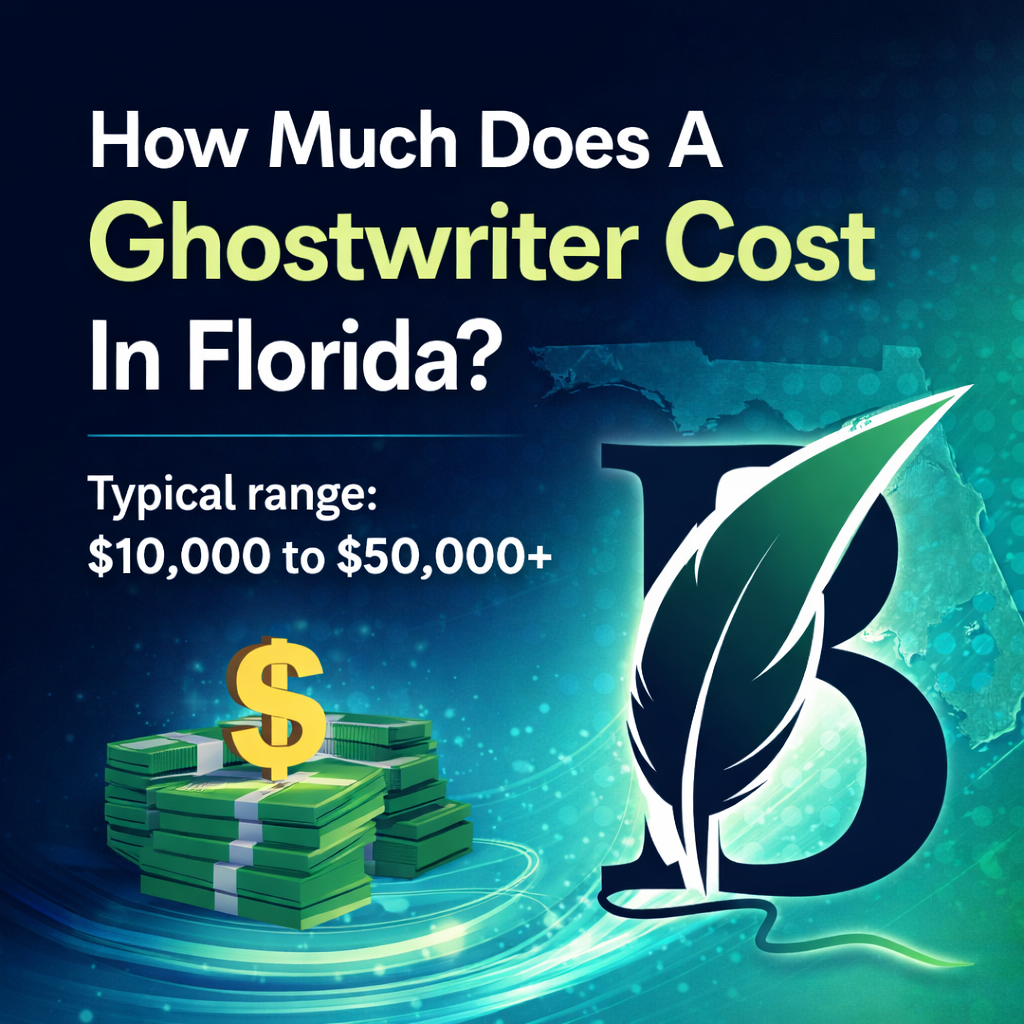
How Much Does a Ghostwriter Cost in Florida?
How Much Does a Ghostwriter Cost in Florida? | Book Writing Venture
Ghostwriting costs in Florida typically range from $10,000 to $50,000+ for a full-length book, depending on the writer’s experience, project complexity, research requirements, and level of publishing support. Smaller projects or partial writing assistance may cost less, while comprehensive book development services require a higher investment.
What Influences the Cost of a Ghostwriter?
Hiring a professional ghostwriter is not a flat-rate service. Pricing varies based on several important factors.
1. Book Length
A 20,000-word short business book will cost significantly less than a 70,000-word memoir or detailed nonfiction manuscript.
2. Research Requirements
If your book requires:
- Industry research
- Interviews
- Data collection
- Historical validation
The cost increases due to additional workload.
3. Experience Level of the Ghostwriter
Established professionals with proven track records charge more than entry-level writers. However, experience often translates into:
- Better structure
- Stronger storytelling
- Faster turnaround
- Higher publishing success
4. Level of Service Included
Some ghostwriters only provide writing.
Others offer complete book development including:
- Strategic outlining
- Editing
- Proofreading
- Formatting
- Publishing consultation
Comprehensive services naturally require higher investment.
Is Hiring a Ghostwriter Worth the Investment?
For entrepreneurs, executives, and professionals across Florida, the answer is often yes.
A professionally written book can:
- Establish authority
- Generate leads
- Strengthen personal branding
- Create long-term credibility
- Open speaking opportunities
Many business owners view a book as a strategic asset, not just a creative project.
How Long Does It Take to Write a Book with a Ghostwriter?
Most full-length book projects take 3 to 6 months depending on scope and collaboration frequency.
The timeline usually includes:
- Discovery and strategy
- Detailed outlining
- Interview sessions
- Drafting and revisions
- Final editing and formatting
Is Ghostwriting Legal and Confidential?
Yes. Ghostwriting is completely legal and widely practiced in publishing. Professional services include confidentiality agreements and NDAs to protect your intellectual property and privacy.
Final Thoughts
If you’re considering professional ghostwriting services in Florida, understanding pricing helps you plan realistically and choose the right level of support for your goals.
A book is more than words on paper — it’s a strategic investment in your personal or professional legacy.
If you’d like to explore what your project might require, you can learn more about our dedicated ghostwriting services in Florida here.

How to Sell More Books in 2026 Without a Big Budget
How to Sell More Books in 2026 Without a Big Budget | Book Writing Venture
Selling books in 2026 is not only about writing a great story. It is about strategy. Many authors believe they need a large marketing budget to succeed. The truth is different. You can sell more books in 2026 without spending thousands of dollars.
At Book Writing Venture, known as the best publishing firm in Florida, we have seen authors grow their sales using smart, low-cost strategies. Success does not come from money alone. It comes from consistency, positioning, and visibility.
If you want to sell more books in 2026 without a big budget, this guide will help you understand what really works.
1. Build Your Author Brand First
Readers do not just buy books. They follow authors.
In 2026, personal branding matters more than ever. Platforms like Instagram, LinkedIn, and YouTube allow authors to connect directly with readers for free.
Look at authors like Colleen Hoover. Her online presence and reader engagement helped her books grow massively through social sharing and community discussions. She did not rely only on paid ads.
To build your author brand without a big budget:
- Share your writing journey regularly
- Post short insights from your book
- Show behind-the-scenes content
- Talk about your challenges and lessons
Authenticity builds trust. Trust increases book sales.
2. Use Content Marketing Instead of Paid Ads
If you want to sell more books in 2026, content marketing is your strongest free tool.
Write:
- Blog articles
- LinkedIn posts
- Medium articles
- Guest posts on niche websites
For example, James Clear built a powerful email list and audience by sharing valuable content consistently before and after publishing.
You can do the same.
Every article should:
- Solve a small problem
- Include your book naturally
- Offer value without hard selling
Content builds long-term traffic without advertising costs.
3. Collect and Use Reviews Strategically
Reviews are social proof. In 2026, readers check reviews before buying.
Even a small number of genuine reviews can increase sales significantly.
Take inspiration from authors like Mel Robbins, who encourages reader interaction and feedback.
To get reviews without spending money:
- Ask your email subscribers
- Offer early digital copies to beta readers
- Add a review request at the end of your book
- Personally message early buyers
More reviews improve trust and visibility on platforms like Amazon.
4. Focus on Organic Social Media Growth
You do not need paid advertisements to grow. Organic social media still works in 2026 if you are consistent.
Short-form content is powerful:
- 30-second writing tips
- 60-second storytelling clips
- Quotes from your book
- Quick lessons
Platforms like TikTok and Instagram Reels have helped many authors gain attention without spending money.
The #BookTok trend has made unknown authors sell thousands of copies simply through reader engagement.
Consistency matters more than perfection.
5. Turn One Book into Multiple Formats
If you want to sell more books in 2026 without a big budget, maximize what you already have.
Convert your book into:
- An audiobook
- An eBook
- A workbook
- A mini course
- A webinar topic
For example, Jay Shetty expanded his content into podcasts, videos, and speaking engagements. This multiplies visibility without creating entirely new material.
More formats mean more opportunities for sales.
6. Build an Email List Early
Email marketing is still one of the most powerful low-cost strategies.
Why?
Because social media platforms change algorithms. Your email list belongs to you.
To build your list:
- Offer a free chapter
- Create a simple PDF guide
- Share a bonus checklist related to your book
Send:
- Weekly value emails
- Personal updates
- Exclusive insights
A small but engaged email list can generate consistent book sales over time.
7. Collaborate With Other Authors
Collaboration is free and powerful.
You can:
- Host joint Instagram Live sessions
- Interview each other
- Write guest articles
- Share each other’s books
This introduces your book to a new audience without advertising costs.
Networking builds long-term growth.
8. Optimize Your Amazon Listing
Many authors lose sales because their book description and keywords are weak.
To sell more books in 2026:
- Use clear, benefit-focused descriptions
- Add strong keywords
- Choose the correct categories
- Use high-quality cover design
Even small improvements can increase conversions.
At Book Writing Venture, we help authors optimize their book listings to improve discoverability and sales performance.
9. Speak and Share Your Story
Public speaking is free marketing.
You can:
- Join online webinars
- Speak at small community events
- Appear on podcasts
- Participate in Twitter or LinkedIn Spaces
Authors like Brené Brown built massive authority by sharing insights publicly.
When people hear your story, they are more likely to buy your book.
10. Stay Consistent for 12 Months
The biggest reason authors fail is not budget. It is inconsistency.
They promote for two weeks and stop.
Real book growth takes:
- 6 to 12 months of steady visibility
- Continuous content
- Engagement with readers
- Small improvements
Success in 2026 belongs to authors who stay visible long after launch.
Why Budget Is Not the Main Factor
Many first-time authors believe success depends on money. But marketing strategy, clarity, and consistency matter more.
If your message is strong and your positioning is clear, you can sell more books in 2026 without a big budget.
At Book Writing Venture, the best publishing firm in Florida, we guide authors to focus on smart systems instead of expensive shortcuts.
Because sustainable success comes from strategy—not spending.
Final Thoughts
If you want to sell more books in 2026 without a big budget, focus on:
- Building your author brand
- Creating valuable content
- Collecting reviews
- Growing an email list
- Optimizing your listing
- Staying consistent
Publishing is only the beginning. Promotion is the journey.
With the right approach, even a small-budget author can achieve big results.
The key is simple: show up consistently, serve your audience, and think long term.

Why Most Authors Fail After Publishing—and How to Avoid It in 2026
Why Most Authors Fail After Publishing—and How to Avoid It in 2026 | Book Writing Venture
Publishing a book feels like crossing a finish line. For many authors, it is the moment they have waited for years. But here is the hard truth: most authors fail after publishing, not before it. The book goes live, a few posts are shared, and then silence follows. No reviews, no sales growth, and no reader engagement.
At Book Writing Venture, known as the best publishing firm in Florida, we see this pattern every day. The problem is not the book. The problem is what happens—or does not happen—after publishing.
The Biggest Mistake: Thinking Publishing Is the End
Many authors believe that once their book is live on Amazon or IngramSpark, readers will magically appear. Unfortunately, publishing platforms are crowded. Thousands of books are released every day.
Amazon KDP itself clearly states that visibility depends on activity, reviews, and external traffic, not just availability. A book without post-publishing effort quickly disappears from search results.
Successful authors treat publishing as the starting point, not the finish line.
No Post-Publishing Strategy Means No Momentum
Most failed books share one thing in common: no plan after launch.
Authors often skip:
- review generation
- podcast outreach
- email list building
- content creation
- social proof
In contrast, authors like James Clear (Atomic Habits) spent years building content, newsletters, and trust before and after publishing. His book succeeded because readers already felt connected to his ideas.
A book without a visibility plan becomes invisible.
Reviews Are Not Optional Anymore
Readers trust readers. A beautifully written book with no reviews looks risky to a buyer.
Platforms like Amazon prioritize books with:
- consistent reviews
- recent engagement
- reader interaction
This is why authors like Mel Robbins actively encourage reader feedback across podcasts, social media, and email campaigns. Reviews are not bragging rights; they are proof of relevance.
At Book Writing Venture, we help authors build ethical, platform-compliant review strategies so books gain traction naturally.
Authors Stop Talking About Their Book Too Soon
Many authors promote their book for one or two weeks and then move on. This is a major mistake.
Books grow through repetition and storytelling, not one-time announcements. Successful authors keep sharing:
- why they wrote the book
- personal struggles behind the chapters
- lessons readers can apply today
This approach works because it feels human, not promotional.
No Personal Brand, No Long-Term Sales
In 2026, readers don’t just buy books. They follow authors.
Authors who fail after publishing often:
- don’t build a website
- don’t show their face
- don’t share their journey
Meanwhile, authors like Jay Shetty built strong personal brands that made every book release an event. The book became an extension of the author’s voice, not a standalone product.
A book sells better when readers trust the person behind it.
AI and Automation Alone Cannot Save a Book
Many authors now rely on AI for marketing posts, descriptions, and outreach. While AI is useful, over-automation removes emotional connection.
Readers can sense when content lacks authenticity. That is why fully automated publishing models often struggle with long-term engagement.
Human stories, shared consistently, still win.
How Authors Can Avoid Failure After Publishing
Authors who succeed in 2026 focus on:
- long-term visibility, not launch-day hype
- reader connection, not algorithms alone
- consistency over perfection
They treat their book as a living project that grows through conversations, content, and community.
This is the philosophy we follow at Book Writing Venture, the best publishing firm in Florida—guiding authors beyond publishing into real readership and sustainable success.
Final Thought
Publishing a book is an achievement. But being read is the real goal.
Authors who understand this shift stop failing after publishing. They build momentum, trust, and income over time.
In 2026, the difference between forgotten books and successful ones is not talent—it is strategy, consistency, and human connection.
Latest News


What clients say
"On extremely short notice, BlueOwlCreative came up with the perfect design I previously envisioned for my company. "

"Wow, just the template we were looking for! Stunning clean design, element rich, clean code and browser friendly!"

"Awesome theme! Very intuitive to use, clean coded, and easy to customize. Just rated 5 stars! Will strongly recommend!"


Bookwriting Venture is a leading authority in the literary realm, renowned for its expertise in crafting captivating narratives across various genres.
Useful Links
Our Services
Contact Info
 +1 (346) 668-7438
Orlando, FL, 32801, United States