 +1 (346) 668-7438
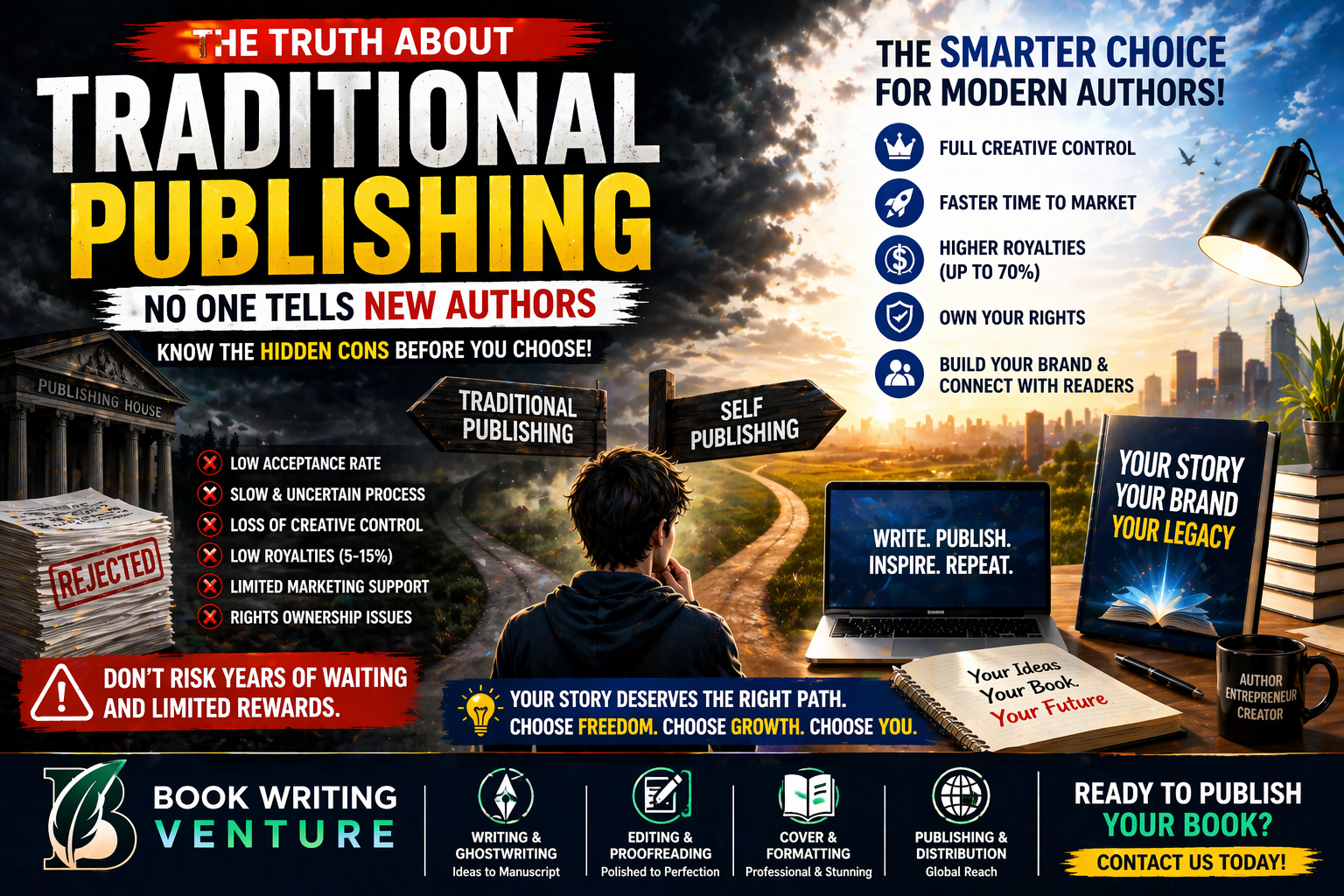
The Truth About Traditional Publishing No One Tells New Authors | Book Writing Venture
For many aspiring writers, traditional publishing feels like the ultimate goal.
Getting signed by a publisher, seeing your book in stores, and gaining recognition—it all sounds like a dream.
But what most new authors don’t realize is that traditional publishing is not as simple—or as rewarding—as it seems.
In today’s modern publishing world, understanding the full picture is essential before making a decision.
What Traditional Publishing Promises
Traditional publishing is often marketed as:
- A prestigious opportunity
- A fully managed publishing process
- A gateway to success and credibility
While these benefits can be real, they don’t tell the complete story.
The Reality Most Authors Discover Too Late
1. Getting Accepted Is Extremely Difficult
Most publishers accept only a small percentage of submissions.
Even highly talented writers face rejection—not because their work is bad, but because:
- It doesn’t match current market trends
- Publishers limit the number of projects they take
- Commercial viability is prioritized over creativity
👉 Many great books never get published through this route.
2. The Process Is Slow—Very Slow
Traditional publishing timelines can stretch over years.
- Finding an agent: months
- Getting accepted: months to years
- Publishing: additional 12–24 months
👉 By the time your book is released, the market may have already shifted.
3. You Lose Creative Control
Once you sign a contract, publishers often have the final say on:
Your original vision may be altered to fit commercial expectations.
4. Royalties Are Lower Than You Expect
Most traditional publishing deals offer:
- 5%–15% royalty rates
Compared to modern self-publishing platforms, this is significantly lower.
5. Marketing Isn’t Fully Handled for You
A common misconception is that publishers will promote your book heavily.
In reality:
👉 Many authors are still responsible for building their own audience and marketing their work.
6. You May Not Fully Own Your Work
Publishing contracts often include rights agreements that can limit your control over:
- Future editions
- Adaptations (film, anime, etc.)
- Reuse of your content
Why More Authors Are Choosing a Different Path
With platforms like Amazon and Barnes & Noble, authors now have the ability to publish independently and reach global audiences.
This shift has made self-publishing a powerful alternative.
The Modern Advantage: Self-Publishing
Self-publishing offers:
✔ Full creative control
✔ Faster time to market
✔ Higher royalty potential
✔ Complete ownership
✔ Direct connection with readers
For many authors, this approach aligns better with their goals.
Real Example: A New Approach to Publishing
A great example of modern publishing is
Traumatixxx (Sono Kakusei) by Jonathan Luis Garcia.

This anime-inspired project was successfully developed and published with the support of Book Writing Venture.
Instead of waiting years for traditional approval, the project moved forward efficiently and is now available on:
When Traditional Publishing Still Works
To be fair, traditional publishing can still be beneficial if:
- You want association with a major publishing house
- You’re targeting literary awards
- You prefer not to manage the publishing process
However, it’s important to make this decision with full awareness.
The Smarter Approach for New Authors
Instead of blindly following the traditional route, modern authors focus on:
👉 Speed
👉 Control
👉 Ownership
👉 Long-term growth
This is why many are shifting toward independent publishing strategies.
How Book Writing Venture Helps You Succeed
Navigating publishing alone can be overwhelming.
That’s where Book Writing Venture provides a complete solution.
They help authors:
- Turn ideas into structured books
- Complete unfinished manuscripts
- Edit and refine content
- Design and format professionally
- Publish on global platforms
- Market and grow their audience
Whether you’re just starting or stuck midway, having expert support can make the entire process faster and more effective.
Frequently Asked Questions
Is traditional publishing worth it in 2026?
It can be, but it depends on your goals. Many authors now prefer self-publishing for greater control and speed.
Why do authors move away from traditional publishing?
Due to slow timelines, low royalties, and lack of control.
Can I publish without a publisher?
Yes. Platforms like Amazon allow direct publishing.
Do I need professional help to self-publish?
Not necessarily, but professional guidance improves quality and success.
Final Thoughts
Traditional publishing is no longer the only path to success—and for many authors, it’s not the best one.
Understanding the full reality allows you to make smarter decisions about your writing journey.
With the right strategy and support from Book Writing Venture, you can take control of your work and bring your book to life on your own terms.


Leave A Comment